 |
| How long can diabetes live after amputation? The actual situation should be |
Saturday, October 13, 2018
How long can diabetes live after amputation? The actual situation should be
Core Tip: Every diabetic patient wants to live a few more years, but if it is already necessary to amputate, it means that the disease has caused very serious damage to the body. How long can diabetic patients live after amputation, which should have a very big relationship with the actual recovery of patients and post-treatment.
Diabetes poses a great threat to the health of patients. Especially as the disease continues to develop, the patient's body still has a lot of complications. Among them, the more common is the ulceration of hands and feet. And the wound is very difficult to heal after ulceration, which is actually caused by long-term blood sugar control. If the degree of infection in the hands and feet is very serious, the doctor will recommend the patient to amputate in order to save the life. In fact, this practice is tantamount to drinking and quenching thirst, but it is also a helpless move. The purpose of diabetes amputation is to prolong life. As for how long a patient can live after amputation, there is no fixed number of things.

Don't want to be amputated, diabetics have 7 things to do! No time to delay
For most people with diabetes, the most fear is the complications caused by diabetes, such as diabetic nephropathy, diabetic foot, retinopathy and other diseases, these complications will cause very much damage to the patient's body. Here mainly talk about the knowledge of diabetic foot, hoping to help more people.
Why is there a diabetic foot?
Long-term high blood sugar levels can cause nerve damage, which can interfere with your ability to sense pain and temperature, which can cause diabetics to not notice the risk of problems on their feet, such as being burnt when washing feet with hot water. .
Nearly 10% of diabetic patients have ulcers in the foot due to peripheral vascular disease and nerve damage, and the patient may not notice the wound on the foot, which in turn may lead to infection.
How to prevent diabetic foot?
 |
| Don't want to be amputated, diabetics have 7 things to do! No time to delay |
Long-term high blood sugar levels can cause nerve damage, which can interfere with your ability to sense pain and temperature, which can cause diabetics to not notice the risk of problems on their feet, such as being burnt when washing feet with hot water. .
Nearly 10% of diabetic patients have ulcers in the foot due to peripheral vascular disease and nerve damage, and the patient may not notice the wound on the foot, which in turn may lead to infection.
How to prevent diabetic foot?
Why is the mortality rate after amputation of diabetic foot high?
Before talking about mortality, it is first necessary to talk about the amputation rate of diabetic foot. Improper treatment of diabetic foot and patient treatment are not timely, resulting in high rates of amputation of diabetes. According to statistics, 70 amputation operations worldwide are related to diabetes. The amputation rate of diabetic foot patients is 25 times that of non-diabetics. Specifically, every 30 seconds in the world, a diabetic foot patient is amputated.
If the amputation can cure the diabetic foot, it may be the best choice for some patients. However, according to the survey, the mortality rate of diabetic foot patients within 20 months after amputation is 20%, and the mortality rate within 5 years is even as high as 50-70%. This undoubtedly sounded the alarm for us.
In fact, the mortality rate after the amputation of diabetic foot is so high that it is foreseeable. The reasons can be analyzed from the following aspects:
1. There is no improvement in blood supply to the lower extremities. Diabetic foot is often accompanied by lower limb nerve and vascular disease, especially vascular disease, which is easy to cause blood circulation disorder in the lower limbs and insufficient blood supply. After amputation treatment, the vascular lesions of the lower extremities were not relieved, and the blood supply to the lower limbs was still insufficient, leading to further necrosis and life-threatening safety.
 |
| Why is the mortality rate after amputation of diabetic foot high? |
In fact, the mortality rate after the amputation of diabetic foot is so high that it is foreseeable. The reasons can be analyzed from the following aspects:
1. There is no improvement in blood supply to the lower extremities. Diabetic foot is often accompanied by lower limb nerve and vascular disease, especially vascular disease, which is easy to cause blood circulation disorder in the lower limbs and insufficient blood supply. After amputation treatment, the vascular lesions of the lower extremities were not relieved, and the blood supply to the lower limbs was still insufficient, leading to further necrosis and life-threatening safety.
Tuesday, October 9, 2018
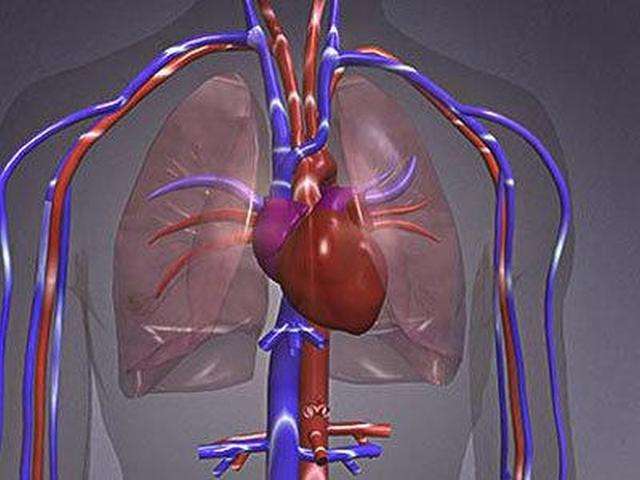
What is diabetic heart disease?
Diabetes heart disease refers to long-term diabetic patients, due to hyperglycemia caused by arteriosclerosis of the coronary arteries, and then developed into coronary heart disease, severe cases of angina, myocardial infarction, and even sudden death.
Diabetic heart disease refers to long-term diabetic patients, due to hyperglycemia caused by arteriosclerosis of the coronary arteries, and then we can say that coronary heart disease, severe cases can occur angina, myocardial infarction and even sudden death, these are diabetes heart disease category. When diabetes is associated with heart disease, the lighter patient may have no clinical manifestations. The first one may be that the patient's symptoms are mild and not manifested. Another possibility is that the patient with diabetes has obvious neuropathy, which leads to his feeling. Missing, there is no clinical manifestations, and there are general diabetes patients who can appear symptoms similar to our conventional coronary heart disease, such as chest tightness, chest pain, palpitations, and severe myocardial infarction.
Diabetes heart disease is also the first need to control blood sugar, control blood sugar in a normal range, and then we need our routine anti-platelet therapy, statin lipid-lowering treatment, depending on the patient's condition, if it is only a chronic coronary heart disease If you only need a medical treatment, if there is a sudden acute, such as angina, such as myocardial infarction, we need to take interventional therapy, or the need for bridging.
 |
| What is diabetic heart disease? |
Diabetes heart disease is also the first need to control blood sugar, control blood sugar in a normal range, and then we need our routine anti-platelet therapy, statin lipid-lowering treatment, depending on the patient's condition, if it is only a chronic coronary heart disease If you only need a medical treatment, if there is a sudden acute, such as angina, such as myocardial infarction, we need to take interventional therapy, or the need for bridging.
Why do people with diabetes often have coronary heart disease? What are they?
Many people with diabetes often have coronary heart disease at the same time. Is it true that heart disease can occur if you have diabetes?
The answer is yes, because the connection between diabetes and heart disease is like a brother-in-law, and it is closely linked.
In the outpatient department of cardiology, when patients diagnosed with heart disease such as coronary heart disease, doctors always ask patients whether they have diabetes or high blood pressure, because more than 70% of heart disease patients have diabetes and high blood pressure.
In the endocrinology clinic, as long as the diagnosis is diabetes, doctors will control blood sugar to prevent complications such as cardiovascular and cerebrovascular diseases, because most people with diabetes eventually die of heart disease.
 |
| Why do people with diabetes often have coronary heart disease? What are they? |
In the outpatient department of cardiology, when patients diagnosed with heart disease such as coronary heart disease, doctors always ask patients whether they have diabetes or high blood pressure, because more than 70% of heart disease patients have diabetes and high blood pressure.
In the endocrinology clinic, as long as the diagnosis is diabetes, doctors will control blood sugar to prevent complications such as cardiovascular and cerebrovascular diseases, because most people with diabetes eventually die of heart disease.
Getting diabetes is equal to getting heart disease. Is it a rumor or a truth?
Coronary heart disease is one of the common complications of diabetes. Research shows that 70% of diabetic patients eventually die of coronary heart disease. Therefore, people regard diabetes as a risk of heart disease, which means that getting diabetes is a heart disease.
To investigate the causes of heart disease in people with diabetes, there are several aspects. First, diabetes and coronary heart disease have the same genetic background; secondly, patients with both diseases often share common risk factors, including high blood sugar, high blood pressure, high blood fat, obesity, etc.; again, in the case of hyperglycemia, blood Viscosity will increase, causing oxidative stress, leading to vascular endothelial damage, promoting the formation of plaque, once the plaque falls off, blocking the cardiovascular and cerebrovascular diseases, it will cause serious consequences such as myocardial infarction and stroke; finally, diabetic patients are also low People with good blood sugar, severe hypoglycemia can induce myocardial infarction.
 |
| Getting diabetes is equal to getting heart disease. Is it a rumor or a truth? |
Diabetes and heart disease are closely related? The culprit is actually a gene!
Type 2 diabetes affects more than 3.8 million people worldwide and is now becoming a global pandemic. However, we are not very clear about the cause of type 2 diabetes, and it is also the main cause of coronary heart disease. Risk factors, but the researchers have not clarified the biological relationship between them. Now researchers from the University of Pennsylvania School of Medicine have conducted a large-scale analysis of a large number of genetic data for the first time to analyze the pathogenesis of type 2 diabetes. The association between type 2 diabetes and coronary heart disease was also elucidated, and the study was published in the international journal Nature Genetics.
By genome-sequencing analysis of more than 250,000 people, the researchers identified 16 new genetic risk factors for diabetes and a new risk factor for coronary heart disease for the first time, thus providing an understanding of the relationship between the two diseases. A certain research basis; subsequent researchers pointed out that most of the genomic loci associated with high-risk diabetes may be directly related to high-risk coronary heart disease, and among the 8 loci, the researchers identified a specific genetic mutation. It may affect the risk of type 2 diabetes and coronary heart disease. These two diseases share the same genetic risk factors and can affect a variety of biological pathways, including immunity, cell proliferation and heart development.
 |
| Diabetes and heart disease are closely related? The culprit is actually a gene! |
By genome-sequencing analysis of more than 250,000 people, the researchers identified 16 new genetic risk factors for diabetes and a new risk factor for coronary heart disease for the first time, thus providing an understanding of the relationship between the two diseases. A certain research basis; subsequent researchers pointed out that most of the genomic loci associated with high-risk diabetes may be directly related to high-risk coronary heart disease, and among the 8 loci, the researchers identified a specific genetic mutation. It may affect the risk of type 2 diabetes and coronary heart disease. These two diseases share the same genetic risk factors and can affect a variety of biological pathways, including immunity, cell proliferation and heart development.
Subscribe to:
Posts (Atom)